


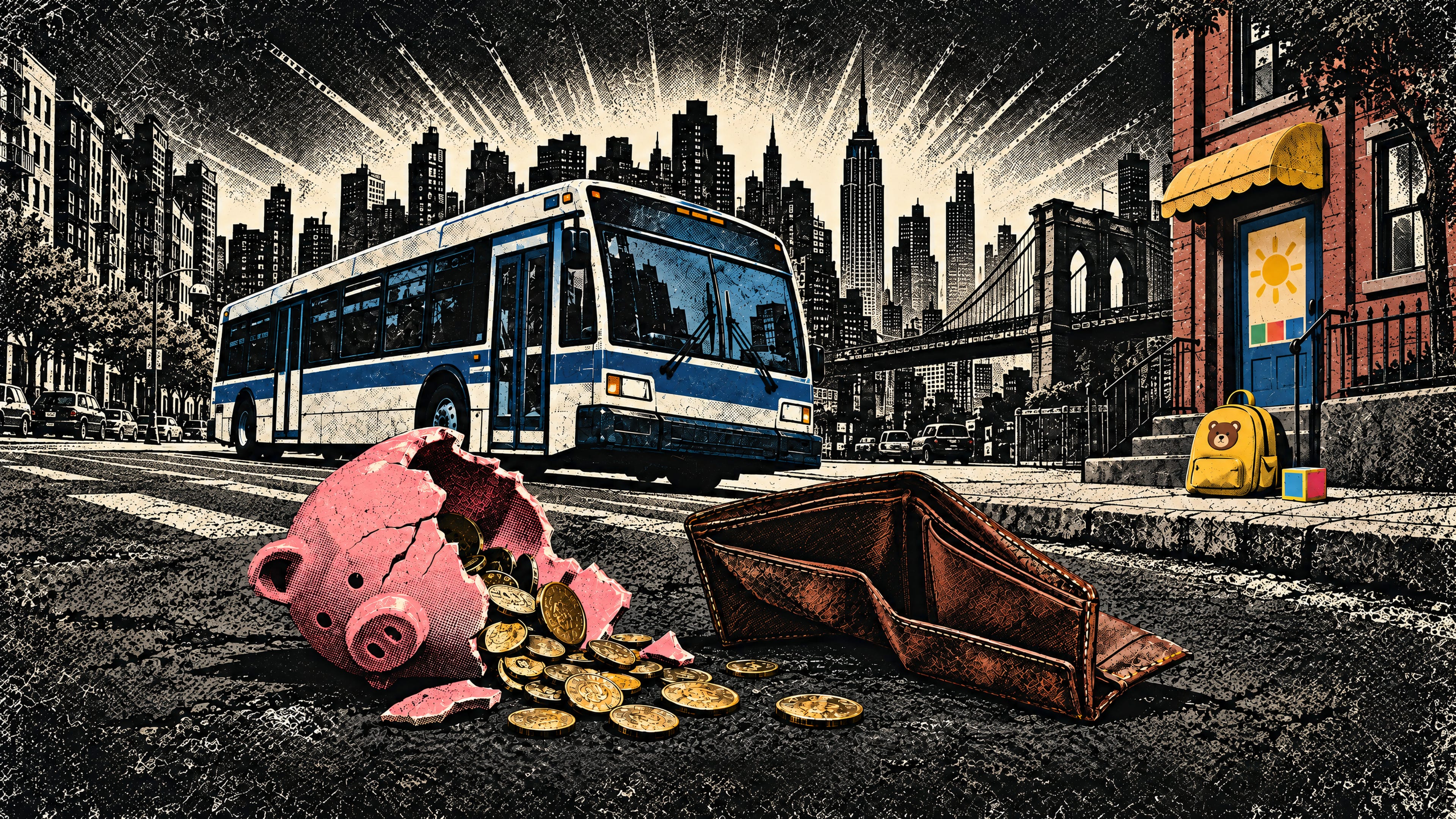
What the History Books and AI Won’t Tell You
People say it all the time. Politicians promise you things and then they never deliver. It’s the oldest joke in politics. The promise is the campaign. The delivery is somebody else’s problem.
But that’s not always true. Sometimes they do deliver.
Look at Earth’s Lost History.
Reagan promised tax cuts and less government interference, and on the tax cuts, he delivered. Not a fraction. Not a phase one. The actual thing. Whether you loved him or hated him, he kept the promise.
Mamdani promised free buses. And for a few months, he delivered. The buses ran free. The promise was kept.
Then the math arrived.
The program had to be cut. The routes were slashed. The service was reduced. The people who needed the bus most were the ones who lost it. The promise was real. The delivery was real. And so was the bill.
Here’s the part nobody will tell you, even if you ask AI directly. You have to drag it out of the machine with aggressive prompting. And even then, it will bury it in a paragraph you have to read twice to believe.
New York City spends more money than almost every state in the country.
Not every city. Not every county. Every state.
Only a handful of states spend more than New York City. One city of eight million people spends more than the entire state of Florida, which has roughly four times the population. It spends more than Pennsylvania, Illinois, Ohio, Georgia, and every other state you can name.
Think about that for a moment.
That is why Mamdani cannot fulfill his promises. Not because he doesn’t want to. Not because the Republicans blocked him. Because the arithmetic does not allow it. To deliver universal childcare, universal healthcare, free college, and free buses, he would have to roughly double the city’s budget. And where does he get that kind of cash without driving the wealthy out of the city even faster than they are already leaving?
He can’t.
That is the whole story. The promise was the campaign. The delivery was the fraction.
The bill is the arithmetic. And the arithmetic is not political.
The math doesn’t lie.
You can get a copy of the song AND art, for just $1
The Free Bus That Already Disappeared

Start with the promise that actually happened.
Zero fare. Zero cost. Free buses for everyone. It was a moral vision. It was also a budget line, and the budget line was already bleeding before the promise was made.
The MTA was not a blank check. It was a system running on fare revenue that was already falling behind its costs. Eliminate the fare, and you eliminate the revenue. The buses still run. The drivers still get paid. The maintenance still happens. The money does not appear.
So what happened? Ridership went up. Revenue went down. The system had to cut something to balance. It cut routes. It cut service. The people who needed the bus most were the ones who lost it.
The flyer is still on the wall. The bus no longer comes.
This is not a failure of the promise. This is the promise working exactly as designed. The promise was never a plan. It was a message. The message got the votes. The plan was somebody else’s problem.
The Childcare That Was Never Universal

Then the stage again. Care for every child. Universal, this time. Bigger promise. Bigger crowd.
The rollout came in the fall. Two thousand seats. Sixty thousand toddlers who needed one. That is roughly three percent of the need. The other ninety-seven percent are on waitlists that run for years, or paying twenty thousand dollars a year in the private market for the care the promise said would be free.
They called it phase one. Phase one is the campaign. Phase two is the excuse. By the time phase two arrives, the children the program was supposed to serve have aged out of the eligibility window.
That is not an accident. That is the design. A universal promise cannot be delivered. It can only be promised. The delivery is always a fraction. The fraction is always presented as a down payment on the rest. The rest never comes.
The press release swears everything is fine. The waitlist says otherwise.
The Arithmetic They Don’t Want You to See
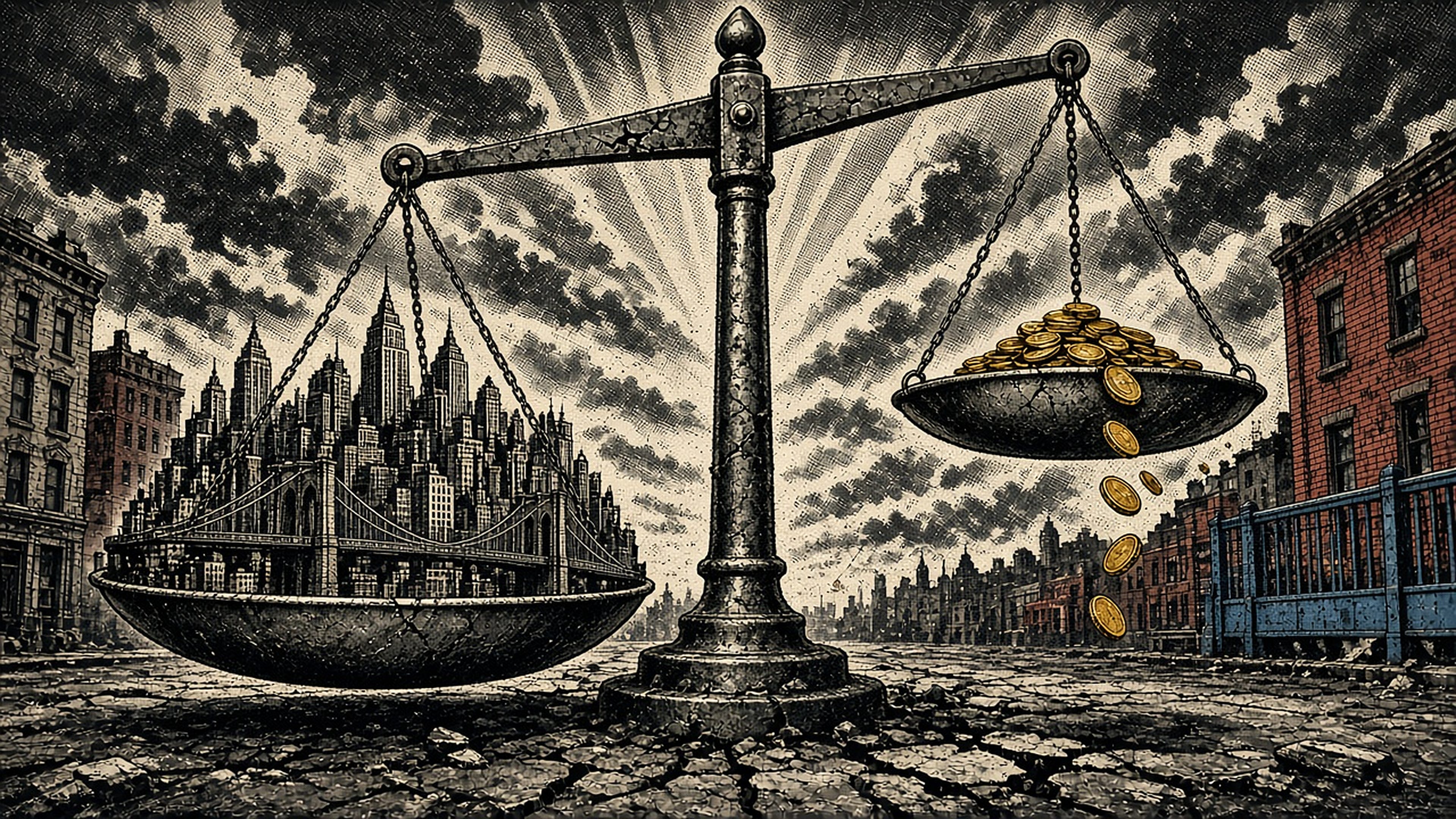
Here is the number that should end the conversation before it starts.
New York City spends roughly $116 billion a year. That is not a state. That is one city. Eight million people. A budget most countries would be proud of, and a tax base that is not expanding to match it.
Now the part that gets buried.
The top one percent of earners pay near half of the city’s income tax revenue. That is not a base. That is a concentration. The budget is dependent on a small number of people who can relocate. They have second homes. They have accountants. They have the ability to change their state of residence without changing their business.
When the tax burden rises past a certain point, they do not protest. They move.
That is not a prediction. That is a pattern. The capital has been moving for years. The question is not whether it will continue. The question is what happens to the budget when it does.
The Europe They Point To

The standard defense is Europe.
The Nordic model. Free childcare for everyone. The social safety net that works. If Sweden can do it, why can’t New York?
Sweden can do it because Sweden is not paying for its own defense.
Europe’s social model is funded by the American military umbrella. The United States spends roughly 3.5 percent of its GDP on defense. Most of Europe spends less than two. The gap is made up by the American taxpayer. That is the accounting trick. The social model works because someone else is paying for the part of the budget no one talks about.
Germany’s economy is shrinking. France’s debt is at levels that would trigger a crisis in a less protected economy. The EU-wide deficits are structural. The programs are not self-funding. They are funded by borrowing, and by the savings on defense that come from the American umbrella.
If Europe had to pay for its own defense at the level the United States does, the social model would not survive the budget meeting.
That is not an opinion. That is the arithmetic.
The Trap
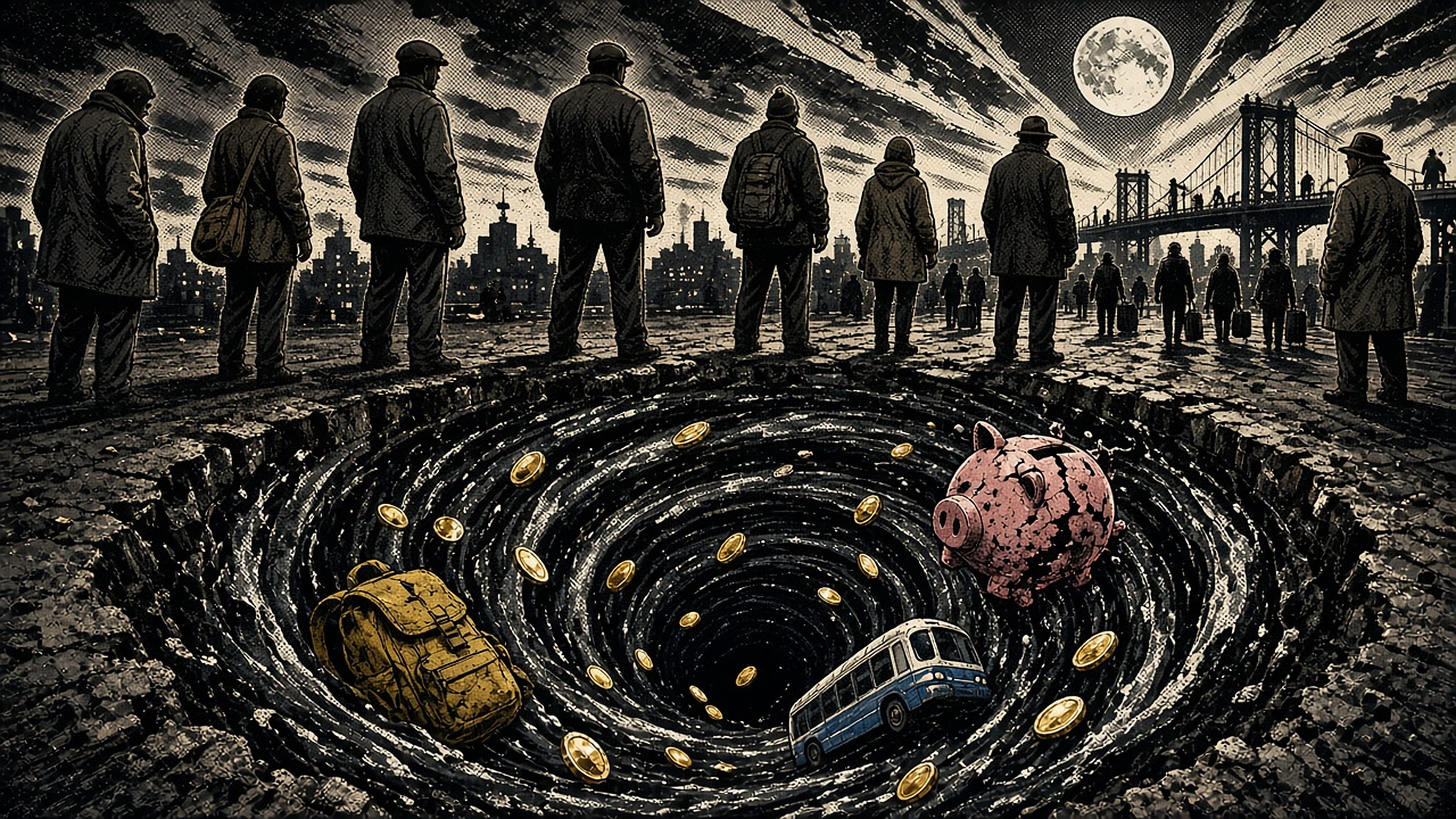
Put it all together and you get the trap.
Raise the taxes. The base takes flight. Revenue falls. The program is cut. The voters get angrier. The next politician promises more. The cycle continues.
The song calls it a fiscal death spiral. That is the right word. It gets worse with each turn.
The politicians know. They have the numbers. They have the meetings with the bankers. They know what happens when the top of the tax base moves out. They promise anyway, because the promise is what gets them elected, and the bill arrives after they are already in office.
That is not a failure of governance. That is the business model.
The Check That Always Comes Due
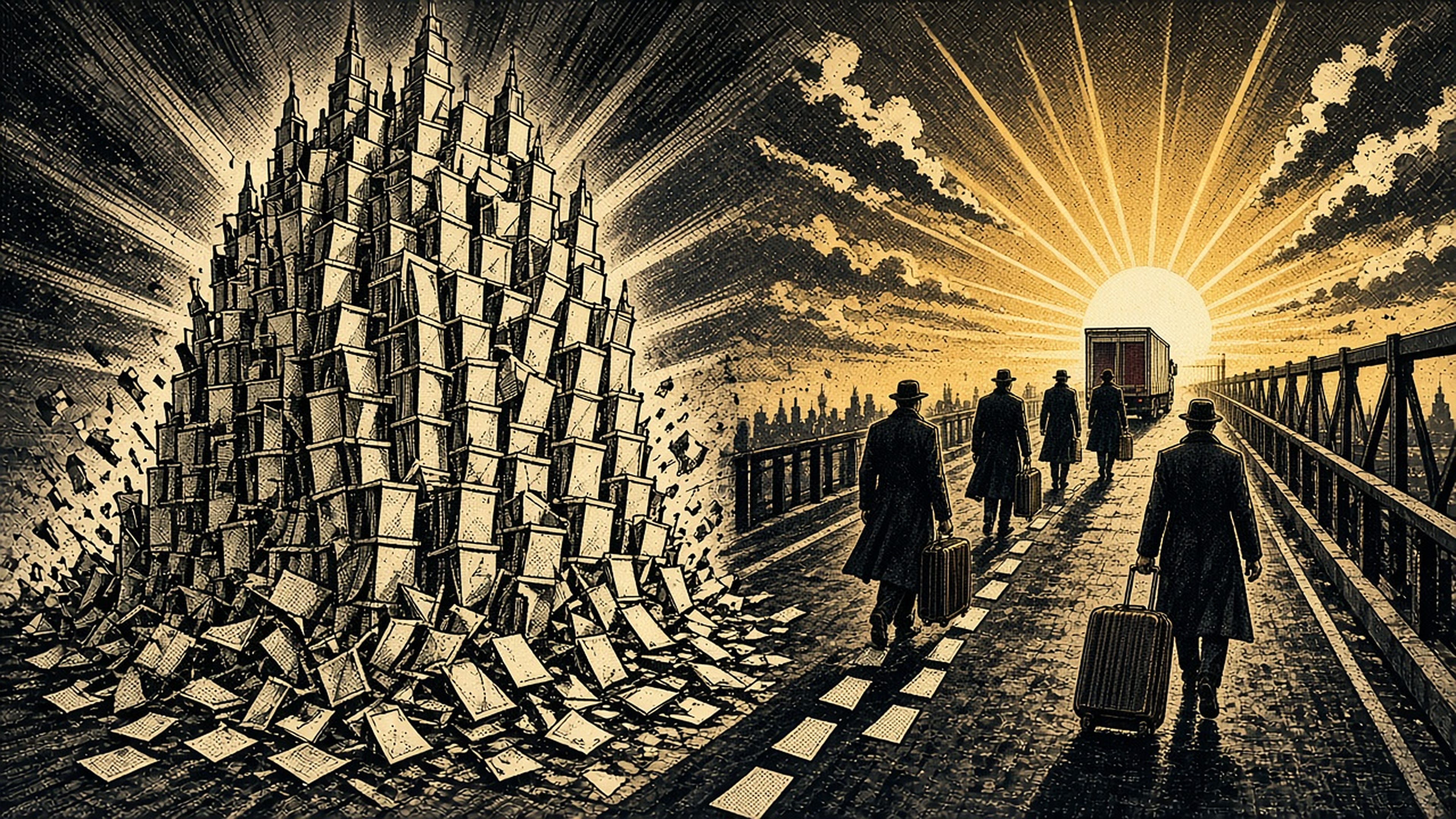
The check always comes due.
On time. Every time.
The promise was made. The bill has not arrived yet. But the arithmetic is not political. It does not care who voted for the program. It does not care who campaigned on the promise. It just arrives, on time, every time, and it is always the average Joe who ends up paying for it.
Not the politician. Not the wealthy who left. The taxpayer who stayed.
That is the receipt. The promise was the campaign. The bill is the outcome. And the people who made the promise are already looking for the next race.
The Programming

Mamdani is not an idiot.
He sees the numbers. He knows where New York City sits in the spending tables. And he has sat down with the people who run the banks.
In May 2026, he held individual meetings with Jamie Dimon, the CEO of JPMorgan Chase, and David Solomon, the CEO of Goldman Sachs. He met with Blackstone’s president. He met with Bank of America’s CEO. These are the people who control the creation of thousands of extremely high-paying jobs that would do wonders for the city’s budget if they stayed.
And Dimon has been explicit about what is happening.
In his shareholder letter, Dimon wrote that JPMorgan has shrunk its New York City headcount from 30,000 a decade ago to 24,000 today, while growing its Texas workforce from 26,000 to 32,000 over the same period. He said the trend “will likely continue”.
That’s 6,000 jobs gone from New York. 6,000 jobs added in Texas. Same company. Same decade. Same trend.
Mamdani knows this. He has sat across from Dimon. He has heard the numbers. He knows the exit is slow. It is not a building closing overnight and popping up in Miami the next morning. It is a layoff in New York and a new hire in Austin. A back office consolidated in Tampa. A team relocated to Dallas. The exit is a thousand small decisions, made over a decade, and every one of them is a line of tax revenue that leaves with the job.
He knows why they are leaving. The taxes are too high. The cost of doing business is too high. The regulatory burden is too high. Dimon said it plainly: “higher taxes mean lower returns on capital and less competitiveness by their nature”.
And he had a choice.
He could have stood up and said: the tax base is leaving, and if it leaves, the city cannot fund the promises we just made. So we are going to change the policies that are driving them out. We are going to make New York competitive again. We are going to keep the jobs here.
That would have been hard. It would have required him to tell his own voters that some of the things they wanted were not affordable. It would have required him to pick a fight with the people who elected him.
He did not do that.
Instead, he called the bankers greedy. He stood outside Ken Griffin’s $238 million penthouse and made a video declaring “We’re taxing the rich”. Griffin called it “creepy and weird.” Dimon said: “I think he realized he made a mistake in naming Ken, and vilifying a name and a person. It’s probably why he’s seeing a bunch of us now. He’d like to maybe have a better relationship with the business community”.
That is the oldest trick in the political book. You do not solve the problem. You find the person your voters are angry at, and you point at them. The banker. The developer. The rich. You take the anger that people feel about their rent, their commute, their childcare, and you convert it into votes. You do not have to explain the arithmetic. You just have to make sure the voter knows who to blame.
That is the programming. Not a lie. A redirect. He redirected your anger away from the arithmetic and toward a person you can see on television.
And here is the part that nobody says out loud. He got you to elect yourself. He gave you the anger, he gave you the villain, and he gave you the promise. But he did not give you a plan. Because there is no plan. The arithmetic does not allow one.
He knows it. You do not. And that is the whole trick.
The math don’t lie.
That question is the receipt. Write it down. Keep it. Because the history books are being written right now, and they are already leaving it out.
You can find a Line by Line explanation of the Lyrics here…